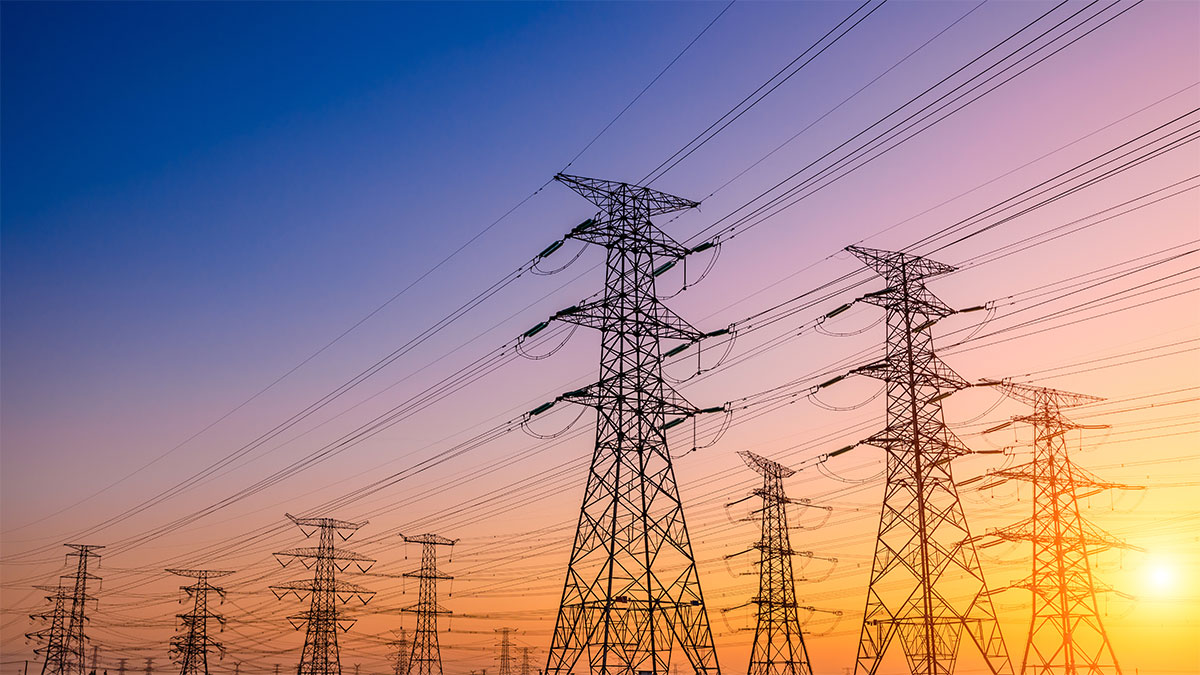


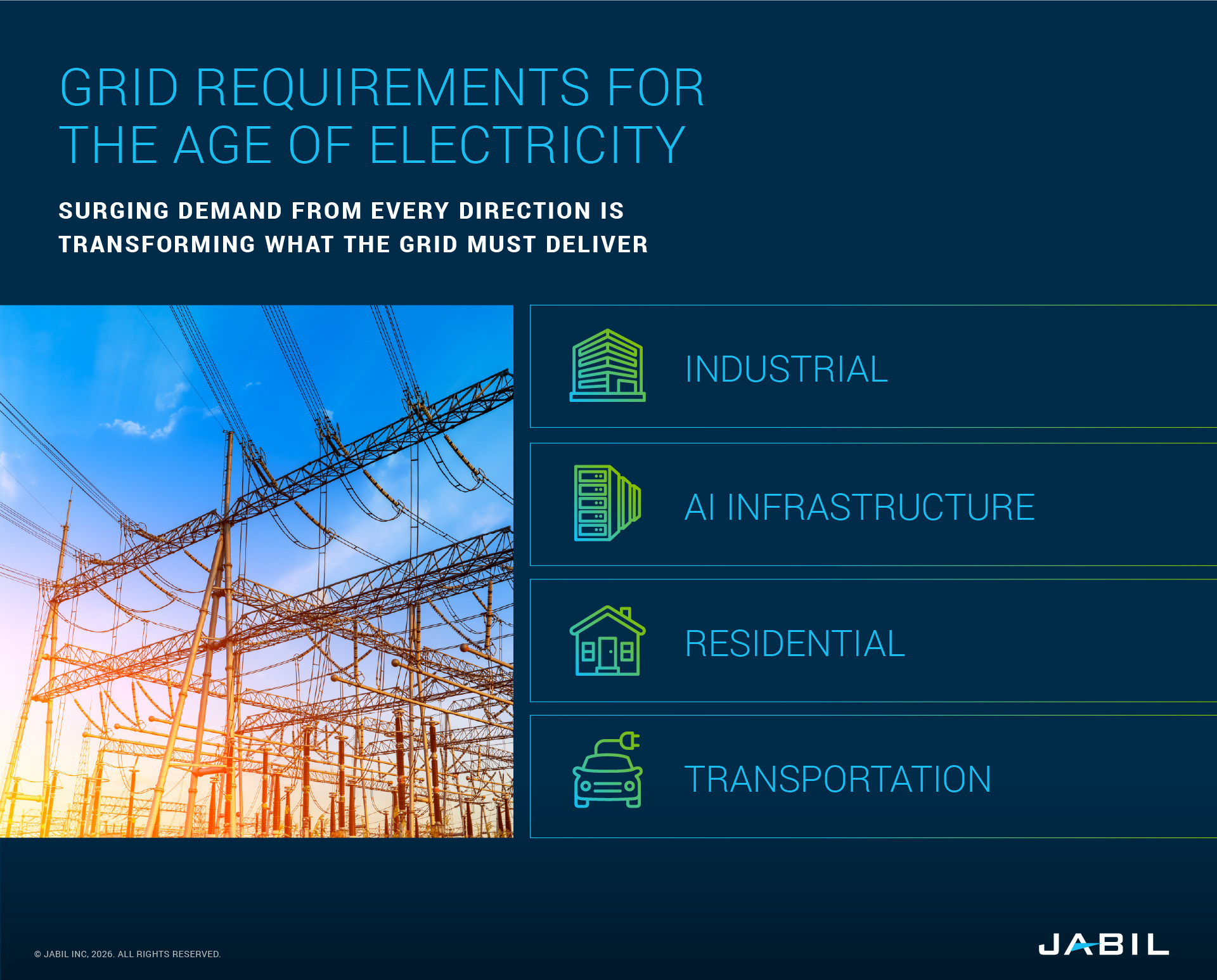
Accelerating demand for power is placing an unprecedented strain on electric grids worldwide. Described by the International Energy Agency (IEA) as the "Age of Electricity," the current era is characterized by the rapid electrification of transport, industry, and building sectors, alongside explosive growth in data centers and artificial intelligence (AI).
The expansion of digital infrastructure is now one of the most consequential drivers of electricity demand, with a single AI‑enabling data center drawing as much power as 100,000 households — assuming a continuous 24/7 energy draw of servers and cooling systems, per the IEA’s model.
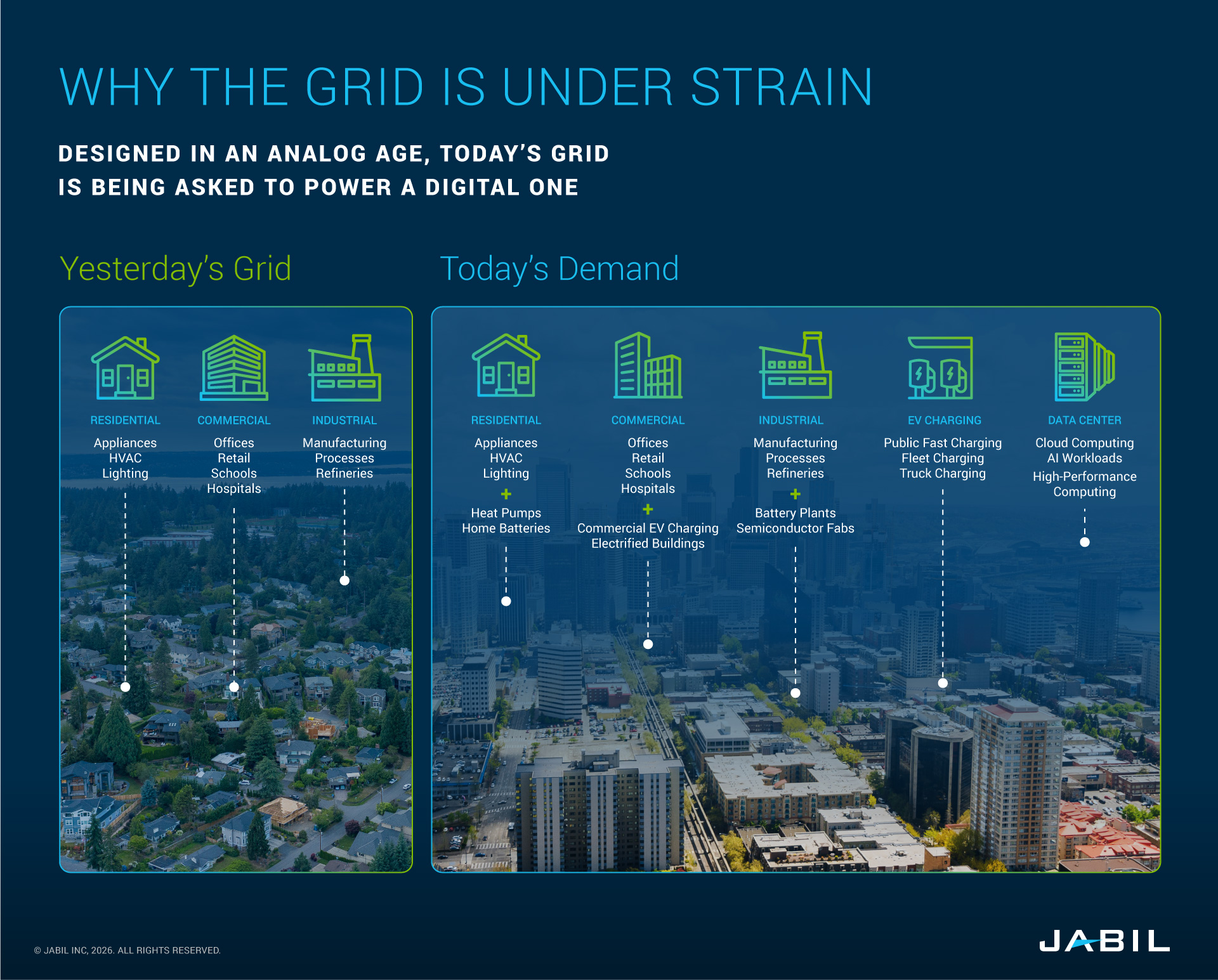
Today’s electric grid was built for a fundamentally different set of demands. Every generation inherits systems designed to meet the needs of the one before it, and for decades the grid did exactly that. What comes next requires an entirely different order of capability. Building it is, by any measure, the defining infrastructure challenge of this decade.
Today’s Power Grid Infrastructure: A System Under Strain
In the United States, much of the grid’s physical backbone — transmission lines, large power transformers, substations, and distribution equipment installed during the mid-century buildout — is now operating at or beyond its original design life. According to the U.S. Energy Information Administration in their 2025 Infrastructure Report Card, roughly 70% of the country’s transmission lines are more than 25 years old, and 60% of circuit breakers are over 30 years old.
Large power transformers on the bulk transmission system now average approximately 40 years in service, placing a significant portion of the installed base at the edge of its rated lifespan. Age alone introduces risk, but when combined with rising demand and more volatile operating conditions, that risk compounds.
Extreme weather has become one of the grid’s most unforgiving stress tests. Since 1980, the United States has recorded approximately 400 weather and climate events causing more than $1 billion in damages, with nearly half occurring since 2015. At the same time, demand is accelerating in ways the grid was never designed to accommodate. ICF, a global consulting and technology services provider, expects U.S. electricity demand to grow 25% by 2030 and 78% by 2050. In major data center corridors, new connections of 100 MW or more now face years-long delays, as utilities work to reinforce systems built for fundamentally different load profiles.
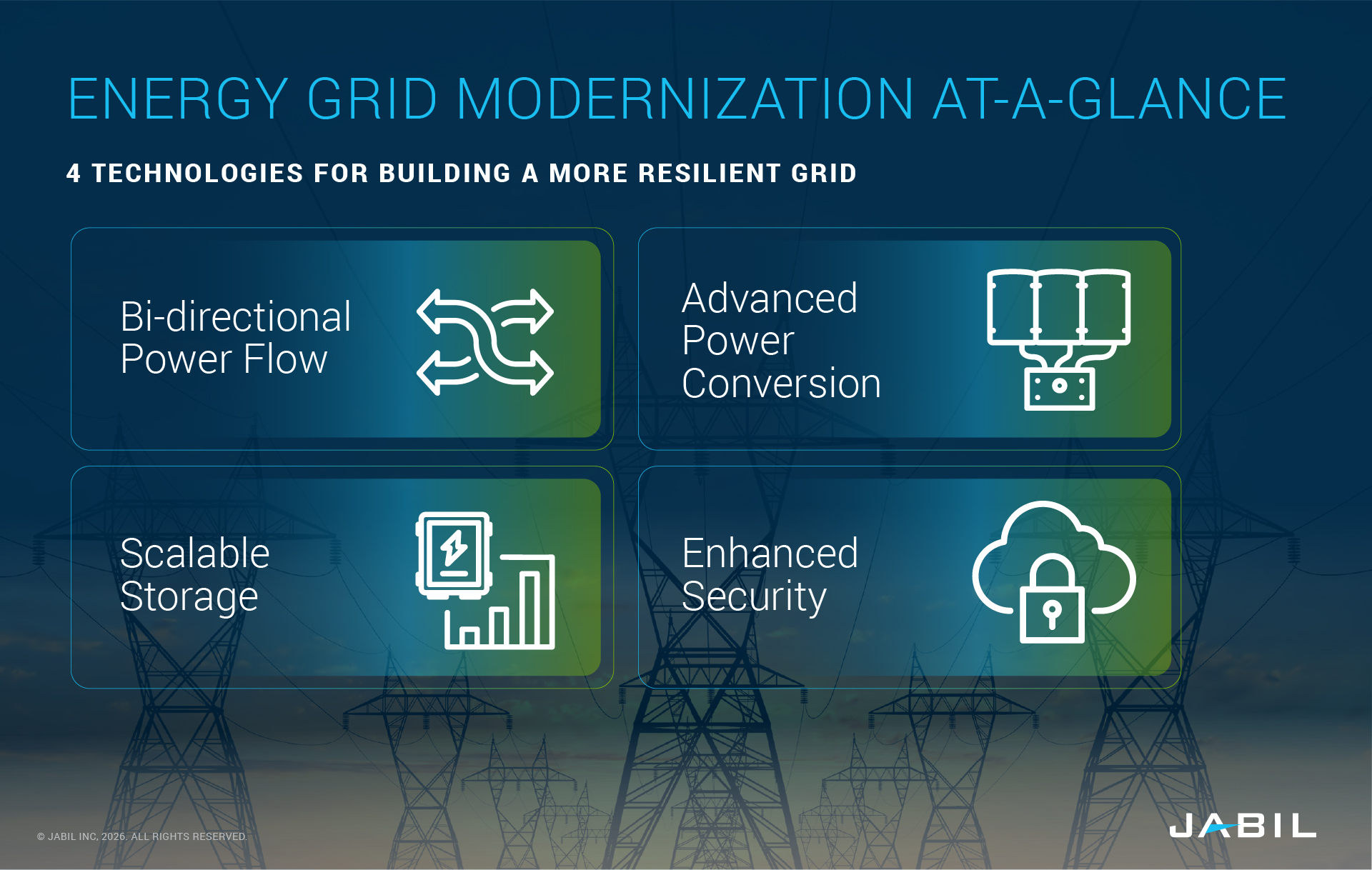
This is a structural mismatch. The grid is being asked to support a digital economy using systems designed for an analog one. The technologies the grid needs — smarter metering infrastructure, scalable storage, advanced power conversion, distributed energy resource (DER) integration, and enhanced security — are already established and ready to scale. The question facing the industry is how quickly and efficiently these solutions can be brought to bear on a system being challenged to its limit.
Smart Meters Enable Bidirectional Intelligence
For most of their history, electric meters had one job: record how much electricity a customer used so the utility could generate a bill. They operated as simple, unidirectional devices, sending a monthly data point back to the electricity provider. Beyond that, visibility into the system, especially at the grid’s edge, was limited.
Modern smart meters fundamentally change that equation. Rather than acting as passive recorders or messengers, they function as active, bidirectional nodes, continuously monitoring conditions and exchanging data in real time. Utilities gain a continuous stream of information: load anomalies, voltage fluctuations, power quality issues, and outage conditions, all resolved down to the individual service point.
This bidirectional intelligence is what makes demand response programs viable, allowing utilities to shape load before the grid reaches a stress threshold rather than reacting after the fact. It is also what enables distributed energy resources (DERs), including rooftop solar, home battery systems, and grid-interactive appliances, to be managed as coherent parts of a network rather than as unpredictable variables at the edge of the network.
The industry's investment in this transition reflects the urgency. Global smart grid investment reached $73.8 billion in 2024, with metering infrastructure accounting for as much as 35% of that total. In North America, more than 80% of utility meters are now smart devices. India has deployed more than 50 million smart meters under its national Revamped Distribution Sector Scheme (RDSS) modernization program, targeting 250 million units, one of the largest infrastructure rollouts of its kind anywhere. Electricity grid technology patents have increased almost sevenfold over the past two decades — a measure of how intensively the global engineering community has concentrated on this transition.
Delivering a more flexible, digitally enabled grid at scale is a challenge well suited for the technical expertise and operational agility provided by a manufacturing partner like Jabil. More than 150 million Jabil-manufactured smart meters are now operating worldwide, with Jabil electronics incorporated into approximately 50% of all smart meters globally. Built on decades of vertically integrated engineering, supply chain, and manufacturing capability, deployments at this scale have helped make intelligent monitoring devices a standard component across electric, gas, and water infrastructure.
Leveraging BESS for a More Stable, Resilient Grid
Battery energy storage systems (BESS) represent another critical enabler improving grid resilience and smoothing the volatility of modern power demand. Batteries can store energy from all sources of electricity and discharge it into the grid when needed, including during extreme weather events or periods of high grid strain.
As the grid takes on the integration of renewable energy sources, whose unpredictability intensifies the challenge in balancing supply and demand, the ability to store and dispatch energy on command has become an essential requirement. Advancements in battery technology have shrunk cell sizes, boosted capacities, and slashed costs, making BESS a viable and attractive option for diverse applications.
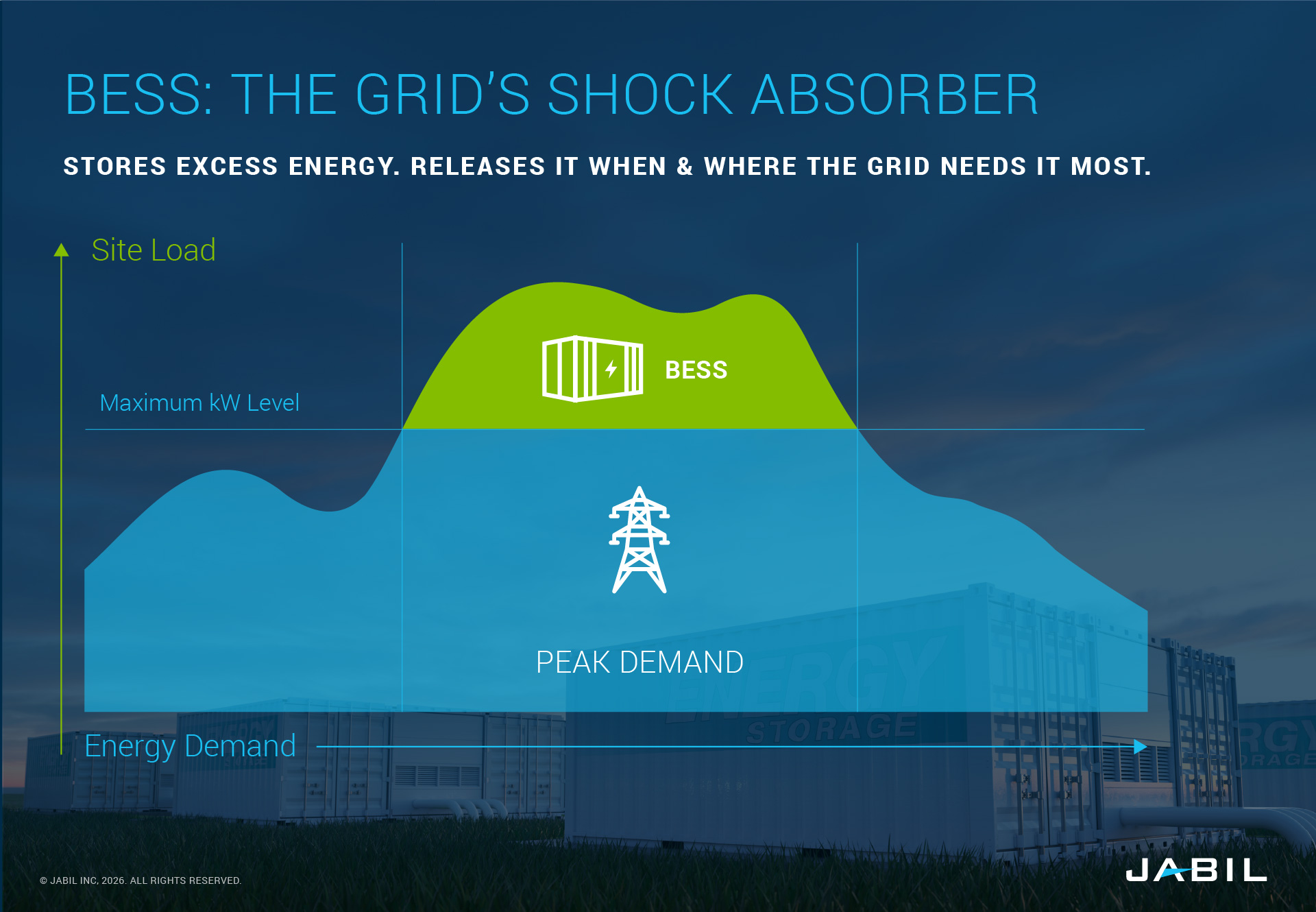
More than just a backup power supply, BESS systems switch between charging and discharging — sinking or sourcing energy within milliseconds — holding grid frequency within the tight tolerances that prevent equipment damage and cascading failures. BESS also enables more intelligent, cost-optimized use of electricity through leverage of strategies such as peak shaving and load shifting to turn energy management into a competitive advantage.
These capabilities have helped drive a surge in BESS-focused projects and sector investment. In the U.S., installed battery storage capacity grew more than tenfold between 2020 and 2024, from roughly 2.4 GW to 27 GW. Overall, the global BESS market, valued at approximately $50 billion in 2025, is projected to exceed $100 billion by 2030. The sector’s growth is being driven by two distinct but converging demand pressures.
Grid operators need flexible capacity they can deploy quickly against aging infrastructure and accelerating load growth. At the same time, data center developers need stable, dispatchable power to bridge gaps in grid supply and buffer local networks running AI workloads continuously. What has made BESS the answer for both is economics as much as engineering. According to BloombergNEF’s annual battery price survey, lithium-ion battery pack costs have fallen from $806 per kilowatt-hour in 2013 to $108 in 2025, extending the case for storage well beyond utility-scale applications into commercial and industrial use. The result is a technology with broad applicability and a rapidly improving cost profile, alongside a deployment challenge that rewards scale.
Among grid technologies, BESS stands out for the speed at which it can be permitted, built, and connected. It’s typically faster to bring online than new transmission lines, peaker plants, or large-scale generation additions. For developers operating on compressed build schedules, like the data center sector in particular, that speed distinction is key.
Translating that advantage into installed capacity, however, requires manufacturing execution to match. Jabil built and shipped approximately 30% of all U.S. BESS installations in 2025, reflecting the scale and operational coordination required to bring storage capacity online quickly.
Where BESS addresses how the grid absorbs and dispatches energy, a separate but equally consequential challenge governs how power moves across the network itself. The transformer infrastructure at the heart of that system is under pressure from both sides: demand it was never designed to serve, and a supply chain that cannot keep pace with its replacement and expansion.
Power Delivery at AI Scale: The Case for Solid-State Transformers
Conventional power transformers have served the grid reliably for generations, stepping voltage up and down at key points across the network. But they do so passively, with limited ability to respond dynamically as load conditions shift. That model worked for a grid built around stable generation and predictable demand. It is far less suited to one now supporting data center demand that the Electric Power Research Institute (EPRI) estimates could account for up to 17% of U.S. electricity generation by 2030.
Solid-state transformers (SSTs) represent a fundamentally different approach and are an ideal match for what the grid needs now. Rather than passively converting voltage, they use power electronics to actively manage power flow in real time, enabling dynamic voltage regulation, bidirectional energy flow, and tighter integration with storage and variable loads. As utilities incorporate more renewable generation into the grid, that flexibility becomes increasingly important for managing fluctuating power flows across the network. Their modular design allows them to scale to application requirements — from flexible substation configurations to high-density data center power delivery — while their compact footprint reduces installation costs and site requirements compared to conventional units.
For grid operators and developers contending with aging infrastructure and compressed build timelines, SSTs deliver the control and flexibility that conventional equipment cannot. The sourcing landscape for that conventional equipment makes the case for SSTs still more compelling.
Supply concerns can appear overnight, particularly when the demand side of the equation is so dynamic, but SSTs are likely to face far fewer headwinds than the earlier generation Conventional Low-Frequency Transformers (LFTs), which have been the backbone of power distribution for over a century. The U.S. remains heavily dependent on imported LFTs due to limited domestic manufacturing capacity and the difficulty of sourcing specialized grain-oriented electrical steel (GOES). Lead times for large power transformers, which averaged roughly 50 weeks in the early 2020s, have now stretched to as long as two to four years.
At the same time, however, demand is accelerating. Wood Mackenzie reports that power transformer demand has increased 119% since 2019, with distribution transformer demand up 34%, driven by load growth, renewable integration, and a wave of end-of-life replacements. For grid operators and data center developers, those wait times represent a direct constraint on build schedules. SSTs’ shorter implementation timelines and reduced dependence on an import-constrained supply chain offer a practical path around it.
Smarter infrastructure, however, brings an expanded attack surface. As the grid adds connected devices, from intelligent meters to BESS management systems to solid-state converters, each new node requires the same security disciplines applied to the hardware itself.
Securing an Increasingly Connected Grid
The North American Electric Reliability Corporation (NERC) now ranks cyber and physical security alongside extreme weather as top-tier reliability risks for the grid. In a recent discussion with Deloitte’s Energy, Resources, & Industrials practice, Calvin Butler, CEO of Exelon and chair of the Edison Electric Institute (EEI), describes managing hundreds of thousands of malicious network access attempts per day as a standing operational reality for large utilities.
The threat environment continues to intensify as more grid infrastructure becomes connected and digitally managed. Industry reporting indicates U.S. utilities experienced more than 1,100 cyberattacks in 2024, an increase of nearly 70% year over year. As utilities and OEMs expand intelligent grid infrastructure, cybersecurity is increasingly being built into grid-connected systems from the outset through measures such as secure boot processes, hardware-rooted trust, encrypted communications, and separation of operational and information technology environments. These protections are shaped by evolving industry standards and customer requirements intended to strengthen resilience across critical infrastructure.
For OEMs developing grid-connected products, maintaining the integrity of those security architectures through manufacturing and deployment is equally important. Partners supporting production must be able to operate within rigorous standards frameworks such as NERC CIP, IEC 62443, and NIST requirements while preserving the integrity of customer-defined security implementations throughout the manufacturing process. As grid infrastructure becomes increasingly connected, the industry’s overall security posture will depend not only on software protections, but also on the consistency and reliability of the hardware entering the field.
Delivering the Next Generation of Grid Infrastructure
Grid modernization is, at its core, an execution challenge. The technologies are established, the investment is accelerating, and the urgency is not in question. What separates progress from potential is the ability to move proven solutions from engineering into infrastructure, reliably and at pace.
Jabil operates within that intersection, supporting customers across the grid value chain with the manufacturing scale and experience developed over decades in power electronics and energy systems. As rapid electrification continues to accelerate, the ability to consistently deliver proven technologies with speed and precision will define how quickly the next generation of grid infrastructure takes shape.
Jabil supports energy sector customers across the full power value chain, from solar and wind generation through battery energy storage and advanced grid infrastructure.
Contact us to start your next project.